
At JK Findings, we understand the pivotal role that plating plays in enhancing the aesthetic appeal...
When it comes to jewelry manufacturing, the details matter. The shape of a finding, the consistency of a chain, the quality of a solder joint, and the final surface finish all contribute to how a finished piece looks and performs.
At JK Findings, plating is an important part of that process.
As a jewelry findings manufacturer and wholesale supplier, we know that our customers rely on us for more than access to jewelry components. They rely on us for consistent quality, dependable manufacturing, and findings that are ready to become part of a finished piece of jewelry.
Our in-house plating capabilities allow us to carefully control an important part of the manufacturing process and provide a consistent finish across a wide range of jewelry findings and components.
What Is Jewelry Plating?
Jewelry plating is the process of applying a thin layer of metal to the surface of a jewelry component. Gold plating can be applied over base metal as well as over materials such as karat gold, .925 sterling silver, and gold filled components.
At JK Findings, our plating department is equipped with experienced technicians and technology designed for precision plating applications. We offer in-house plating capabilities for karat gold, .925 sterling silver, and 1/20 14K gold filled items.
The purpose of plating can go beyond simply changing the color of a component. Depending on the application, plating can contribute to the appearance, consistency, durability, and overall finish of a jewelry piece.
Gold Plating Thickness Matters
Not all gold plating is the same. The thickness of the gold coating is an important factor in determining how the plated surface will perform.
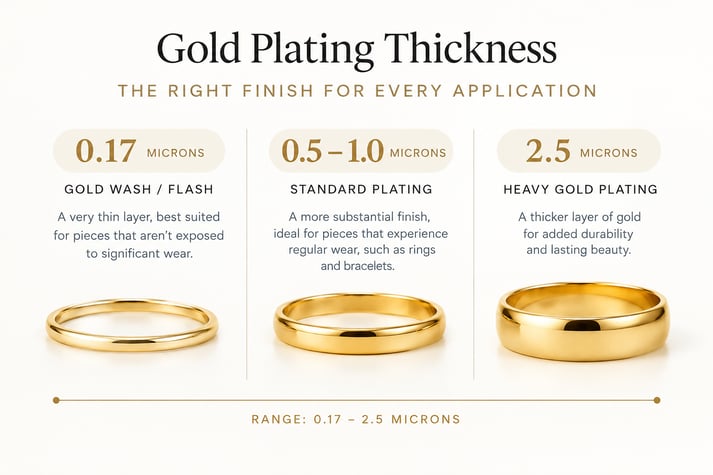
Gold plating can range from approximately 0.17 to 2.5 microns.
A plating thickness of approximately 0.17 microns is often referred to as gold wash or flash. This is a very thin layer and is generally best suited for jewelry applications that are not exposed to significant wear.
For many jewelry applications, a plating thickness of approximately 0.5 to 1.0 microns provides a more substantial finish. This thickness can be appropriate for pieces that experience regular wear, including items such as rings and bracelets.
Plating at approximately 2.5 microns is often referred to as heavy gold plating.
The appropriate plating thickness depends on the material, component, intended use, and desired result. For jewelry manufacturers and wholesalers, understanding these differences is important when selecting the right finish for a particular application.
Why Is Jewelry Plating Important?
Plating can serve several purposes in jewelry manufacturing.
A More Consistent Appearance
One of the most important benefits of plating is consistency.
Jewelry components can sometimes have slight variations in color or appearance. This can occur when components come from different manufacturing processes or suppliers. Certain manufacturing processes, including soldering, forming, and heat exposure, can also affect the appearance of a finished component.
Applying a controlled plating finish can help bring components together with a more consistent and uniform color and appearance.
For a jewelry manufacturer, that consistency matters. When multiple components are assembled into one finished piece, variations in color can become noticeable. A consistent plated finish helps create a more cohesive final product.
Improved Surface Finish
Plating can enhance the appearance of a jewelry component by providing a uniform surface finish and color.
For wholesale jewelry customers purchasing findings in production quantities, consistency from one piece to the next is an important part of quality control. Our plating process is one of the ways we work to maintain that consistency.
Wear Resistance
Depending on the plating type, thickness, and application, plating can improve resistance to abrasive wear.
The intended use of the jewelry should always be considered when selecting a plating thickness. Jewelry that experiences more frequent contact and friction may require a different plating specification than a component intended for occasional wear.
Corrosion Protection
Plating can also help inhibit corrosion by providing a protective surface layer over the underlying material.
This is particularly relevant when selecting finishes for jewelry components that need to maintain their appearance during storage, manufacturing, and use.
Why Do We Plate Some of Our Gold Filled Findings?
This is an important distinction when it comes to our 1/20 14K gold filled jewelry findings.
Gold filled material already contains a durable layer of gold that is mechanically bonded to its base metal. So why would we apply additional plating to certain gold filled components?
The answer is primarily consistency, finishing, and the manufacturing process.
Some gold filled findings undergo additional manufacturing steps such as soldering, forming, joining, or heat exposure. These processes can create subtle differences in the surface appearance or color of the material.
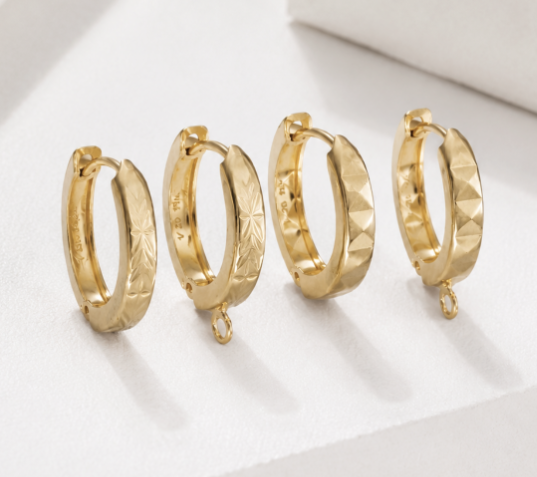
In addition, components used together in a finished piece may originate from different manufacturing processes or sources and can have slight variations in color.
Additional plating allows us to bring those components together with a more uniform gold finish.
Certain gold filled findings may therefore receive plating as part of their manufacturing and finishing process. Examples can include selected closed jump rings and stacking rings, ball-end components, lobster claws, spring rings, and trigger clasps.
The plating does not change the fact that the component is gold filled. Rather, it is an additional surface treatment used to help achieve the desired appearance and finish.
Plating After Manufacturing
Timing is another important part of the plating process.
For certain jewelry findings, plating takes place after manufacturing processes such as soldering, forming, or heat treatment.
This allows us to finish the component after those processes have been completed and helps create a more consistent final appearance.
For example, when a gold filled component is soldered or formed, the surface can develop slight variations in color or appearance. Plating the finished component helps create a more uniform finish rather than relying solely on the appearance of the material before manufacturing.
This is one of the ways our plating capabilities work together with our broader manufacturing processes.
Our Plating Process
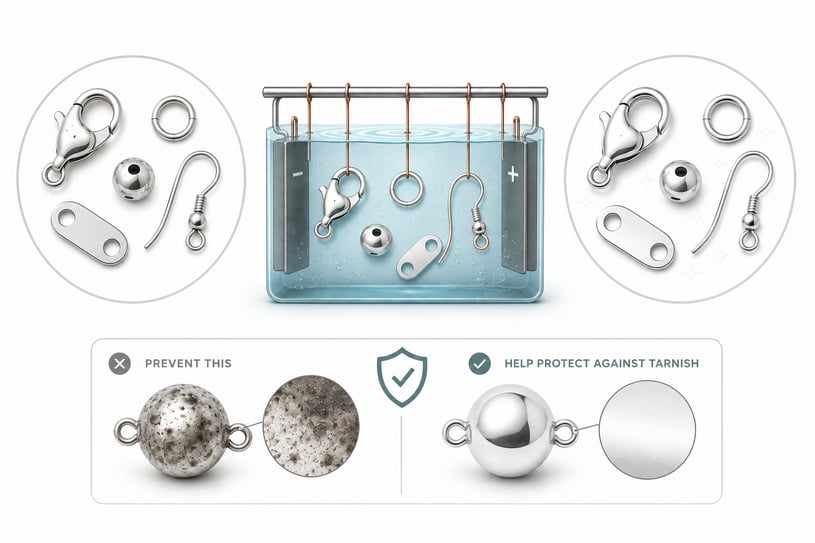
JK Findings uses electroplating for our plating applications.
Electroplating uses an electrical current to deposit metal onto the surface of a component. The jewelry piece is immersed in an appropriate plating solution, allowing the desired metal coating to be deposited onto its surface.
The process requires careful control to achieve a consistent finish. Factors such as the material, surface preparation, plating solution, current, and desired thickness all contribute to the finished result.
Because plating is performed as part of our manufacturing operation, our team can consider the plating requirements alongside the construction and intended application of the component.
Regular Plating vs. Hamilton Plating
At JK Findings, we offer different plating options based on the application and customer preference.
Our Regular Plating is used on the majority of our plated items. We also offer Hamilton Plating on select items based on customer preference.
The two finishes can provide different appearances and performance characteristics, making the choice an important consideration for businesses looking to maintain consistency across a jewelry collection.
For customers interested in comparing the finishes, we can provide samples showing the difference between our Regular and Hamilton plating options.
Rhodium and Anti-Tarnish Plating
Gold isn't the only plating option available through JK Findings.
We also offer rhodium plating and anti-tarnish plating services.
Rhodium is commonly used as a bright, durable finish, particularly on silver and white metal jewelry applications.
Anti-tarnish plating can provide an additional layer of protection intended to help inhibit tarnishing and maintain the appearance of the finished component.
The appropriate finish depends on the material, intended application, desired appearance, and performance requirements of the jewelry.
For a wholesale jewelry findings customer, the quality of an individual finding matters. But consistency across an entire production order matters just as much.
A Reliable Partner for Wholesale Jewelry Findings
Since 1975, JK Findings has been connecting jewelry manufacturers, designers, and businesses with the components they need to create finished jewelry.
Our in-house manufacturing and finishing capabilities allow us to maintain greater control over the quality and consistency of many of the products we offer.
Plating is one part of that process.
From 1/20 14K gold filled findings and .925 sterling silver components to karat gold jewelry findings, we work to provide products that meet the expectations of businesses that depend on reliable jewelry manufacturing and wholesale supply.
Because when you're building jewelry for your customers, the finish isn't an afterthought.
It's part of the product.
Looking for a Reliable Jewelry Findings Supplier?
Explore our selection of wholesale jewelry findings or contact our team to learn more about our manufacturing and plating capabilities.
JK Findings | Connecting Jewelry Since 1975